

 Dec 14, 2025
 3 min read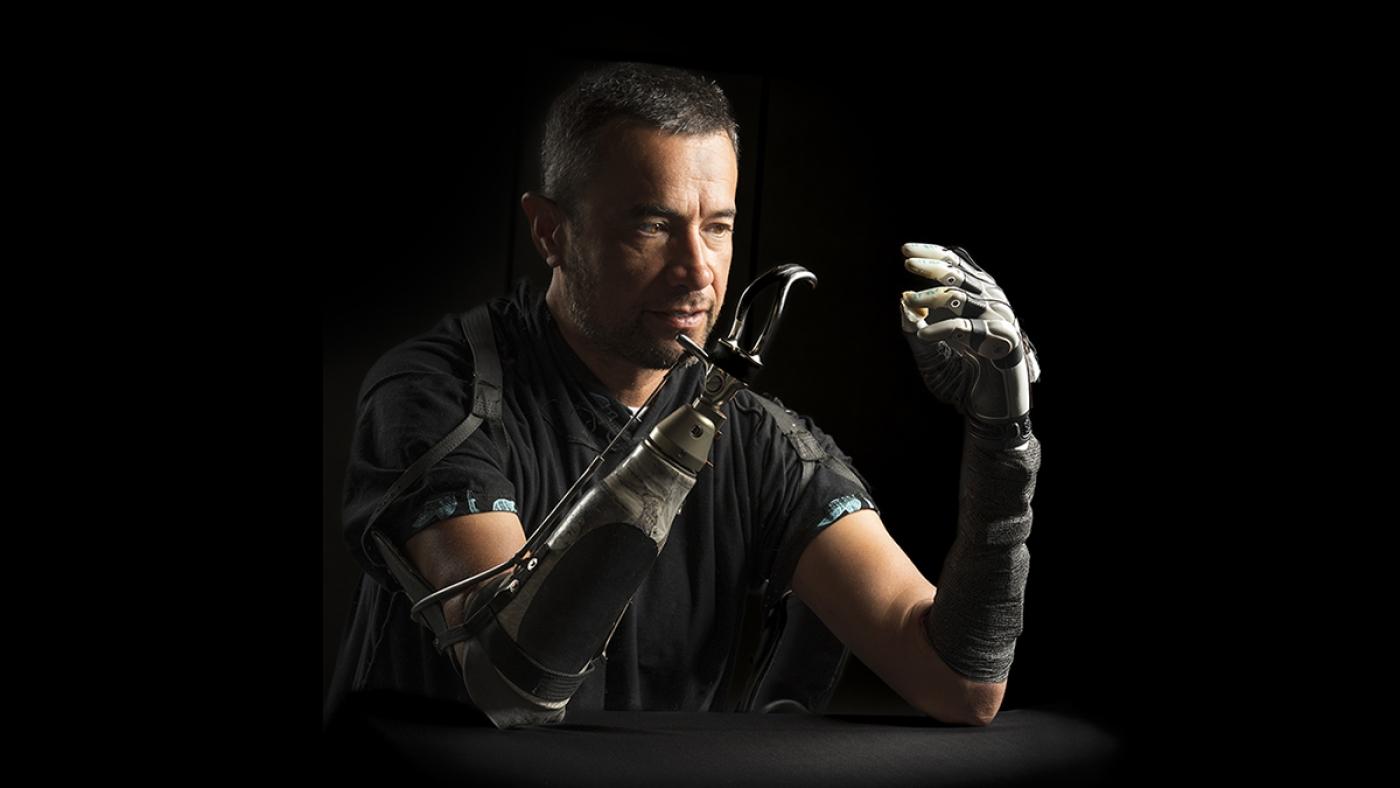
Experiences and skills are at risk of fraud and repetition as a matter of new learning researchers.
Amisoes often dry out of them.AI can solve that gap
Scientists are using artificial intelligence to make bionic hands work better for people who need them
Researchers have created a prosthetic hand that, with the help of artificial intelligence, behaves more like a real hand.
Keys are designed for hands to know when the user wants to do something, then share control of the actions needed to complete the task.
The approach, which combined AI with special sensors, helped simulate four people missing a hand drinking from a cup, said Marshall Trout, a researcher at the University of Utah and the study's lead author.
With sensors and AI helping, participants held the cup "believably" and pretended to take a drink, Trout says.But without that joint control of the bionic hand, he says, "they were either spilling or throwing up all the time."
John Downey, an assistant professor at the University of Chicago who was not involved in the study, said the breakthrough, described in the journal Nature Communications, is significant because "the ability to apply gripping force is one of the things we struggle with in prosthetics right now."
Such problems cause many amputees to become frustrated with their bionic hands and stop using them, he said.
helping hand
The latest bionic hands have motors that allow them to rotate, move individual fingers and manipulate objects.They can also detect electrical signals from the muscles used to control these actions.
But as bionic hands become more able, they also become more difficult for consumers to control, trout says.
"One has to sit down and really focus on that," he says, "which is not how the whole arm behaves."
For example, a natural hand requires little cognitive effort to perform a routine task, such as reaching for an object or tying a shoelace. This is because when a person initiates the action, most of the work is done by special circuits in the brain and spine that take over.
These circuits allow multiple tasks to be performed smoothly and automatically.Only our conscious mind notices when a shoe breaks or an object suddenly moves.
Therefore, Trout and a group of scientists are making the creation of smarttesis software that acts like a human hand.
"I just know where my coffee cup is, and my hand will be marked and make contact with it," she said."That's what we want to create this system for."
The team turned to AI to take over some of these subconscious functions.This meant detecting not only the signal coming from a muscle, but also the intention behind it.
For example, the artificial intelligence control system has learned to detect the slightest twitch in a muscle that flexes the hand.
"That's when the machine controller comes in and says, 'Oh, I'm trying to sense something, I'm not sitting still,'" says Trout.
To make the approach work, the scientists modified a bionic hand by adding proximity and pressure sensors, allowing the AI system to measure the distance to an object and estimate its shape.
At the same time, a pressure sensor on the fingertip tells the user how strong it is.
The idea of sharing bionic hand control deals with the way many people when they use prostuman techniques, says the Utah professor and Director of UTAHEMICICTS.
“You can create a robotic arm that can do this job better than a human,” he said.But when you give it to someone, they don't like it.
This is because the device feels strange and out of your control, he says.
John Downey says that one of the reasons we feel connected to our hands is that they are jointly controlled by our thoughts and reflexes in the brainstem and spinal cord.
This means that the thinking part of our brain does not have to worry about the details of each movement.
"All of our motor control involves reflexes that are subconscious," says Downey, "so it will be important to give robots imitations of those reflex loops."
George's smart bionic hand is to solve that problem.
"The machine does something and the human does something, and we combine these two together," he says.
This is a key step towards creating prosthetic limbs that feel like an extension of your own body.
"Ultimately, when you create a tangible robotic arm, it becomes part of the user experience, it becomes part of itself and not just a tool," says George.
Even advanced bionic hands need some help from the human brain, Downey says.
For example, a person can use the same natural hand to thread a needle.
"Recently Dynamic Robots Are Commonly Handled".
This may change as bionic organs become more versatile and capable.What won't change, scientists say, is people's desire to maintain a sense of control over their prosthetics.